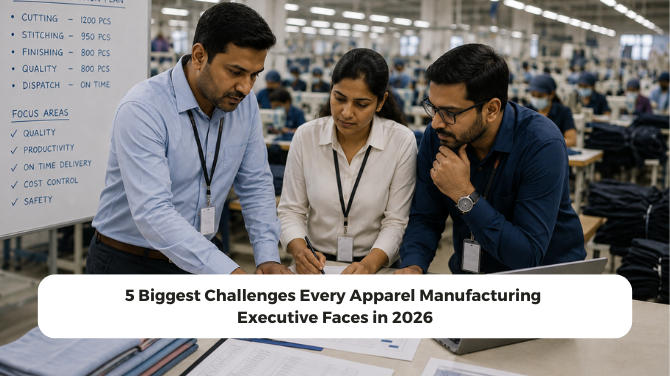
If you think manufacturing garments is all about producing more clothes, then you are wrong. We have been working with garment manufacturers over the last three decades, and we have seen one thing in common so far. That is the hectic schedules in a garment manufacturing process. We have seen executives in the apparel manufacturing sector tackle more than just production. It is managing the tight schedules, controlling costs, coordinating with suppliers, and working around the clock to meet increasingly tight schedules and deliver on deadlines. We have found the top 5 challenges we have spotted so far, and let’s get right into it.
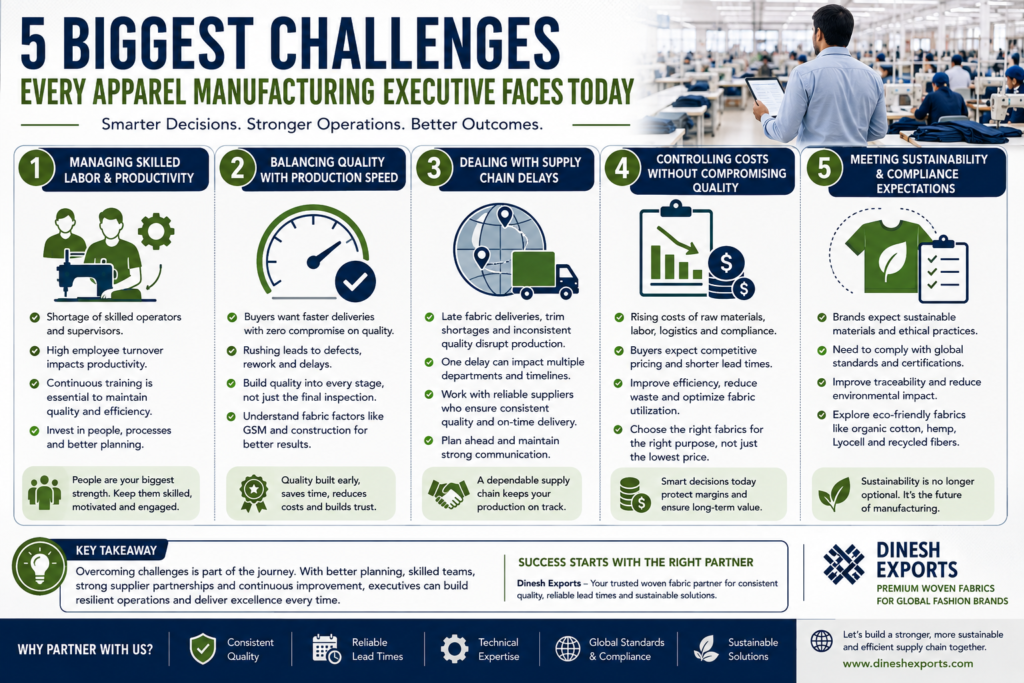
1. Managing Skilled Labor While Maintaining Productivity
The apparel industry is run by experienced professionals as it irequires high attention to detail, and people remain one of the top strengths. But this also makes it one of the weaknesses because finding people who are highly skilled and making them stick to your company is really difficult these days, as everyone is trying to recruit them. Where do we need these experienced people? In:
- sewing operation
- quality inspections
- production supervision
- And more
If trained people are leaving your organization, then it is slowly costing you in resources and slowing your growth because it will take time to hire a new person and then train them to get on track. If you want to keep your employees, then make sure you are providing them with ample opportunities for learning and development.
2. Balancing Production Speed With Product Quality
Everyone who is buying from you is constantly expecting two things: one is that you deliver their goods on time, and two, you deliver the highest quality item to them. The problem here is balancing both. Professionals in this space know exactly how difficult it is to do both. If you are always rushing things to make a deadline, then you are bound to make mistakes, making the quality go down. On the other hand, if you are always checking things, then you may miss the deadline. Instead of doing this, you can always focus on maintaining quality at each and every stage of the production. Also, if you want to understand Fabric GSM and Types of Woven Fabric, check out our article. You can learn more about how production teams figure out how different fabrics will behave during cutting, sewing, and finishing.
3. Dealing With Supply Chain Delays
As an apparel manufacturer, getting your materials required for production is as important as getting your planning right. What are the things that put your planning into issue:
- Late fabric deliveries
- unavailable trims
- delayed accessories
- Inconsistent material quality
These things can actually mess up your plan pretty quickly. The issue is that if any of these things are delayed, that delay gets spread to other regions of the production process, so you need to make sure that your process is on point. If you want to avoid such problems, always build a good relationship with your supplier and have open communication. If you’re evaluating manufacturing partners, then you need to check out our guide on How to Choose the Right Sustainable Woven Fabric Manufacturer for Your Brand. It explains what you need to look for before placing bulk orders.
4. Controlling Costs Without Compromising Quality
Everyone is worried about the rising cost of raw materials these days. Not only that:
- Labor
- Logistics
- Energy
- compliance
And more have increased their costs. At the same time, you will see buyers are continuing to ask for competitive pricing and shorter lead times, which is frustrating.
One thing you can do is increase your efficiency of production if you want to maintain your quality without increasing prices.
Here is a list of other things you can do:
- reduce waste
- optimize fabric utilization
- strengthen supplier relationships
Also, you need to choose the Best Fabrics for Fashion Design only on the basis of the garment’s purpose, rather than simply selecting the cheapest option available to you.
5. Meeting Sustainability and Compliance Expectations
Every exports comes with sustainability requirements. It is a thing now, not just a trend. You are expected to meet various international manufacturing standards if you want to compete in the market. Otherwise, you are not expected to get orders from reputed giants. What are the things they look for:
- environmental standards
- ethical production practices
- Traceability
- responsible materials.
If you are trying to keep up with changing regulations while remaining competitive, then you know exactly how difficult it is.
You need to be sourcing Sustainable Woven Fabrics, recycled materials, and innovative fibers such as Lyocell to keep up with this. If you are considering sustainable alternatives for future collections, then you need to check out our article on Lyocell Fabric Manufacturers in India.
Strong Supplier Partnerships Make Every Challenge Easier
We at Dinesh Exports have spent more than three decades working with various local and international brands, supplying woven fabric for them. Over these years, we have also grown from just a mill to vertically integrating ourselves to make sure that we are able to provide the best quality products at the right time. If you like to learn more about our production capabilities, then please contact us.
Final Thoughts
Your job as an apparel manufacturer is always evolving and more demanding than ever. You are expected to manage people, maintain a high quality of output, control your costs, and meet deadlines set by the buyers. If you are one of those apparel manufacturers, then your only way to avoid this is to increase your efficiency, plan better, and have a really good rapport with your suppliers. This will help you avoid delayed production and help save resources.
Frequently Asked Questions
What are the biggest challenges in apparel manufacturing?
Managing people with specialist skills and maintaining the same quality of output when deadlines are strict are some of the common challenges we have seen in apparel manufacturing.
Why is skilled labor important in garment manufacturing?
If you hire experienced professionals, then they will take care of the tasks assigned to them perfectly without needing external oversight.
How do supply chain delays affect apparel production?
If any of the materials are delayed, then your whole production schedule will be delayed.
Why is sustainability becoming important in apparel manufacturing?
Sustainability certification is a type of guarantee for things like environmental resposible processes and ethical production steps.
How can manufacturers improve production efficiency?
You need to have better planning, have proper communication line in place with your supplier, and also keep your most valuable employees with you.